
Where Should You Keep Your Will? Storing It Safely Without Losing It
A Will is only useful if it can be found when it's needed. Here's a plain-English guide to storing your Will safely, registering it on the National Will Register, and what to tell your executors.
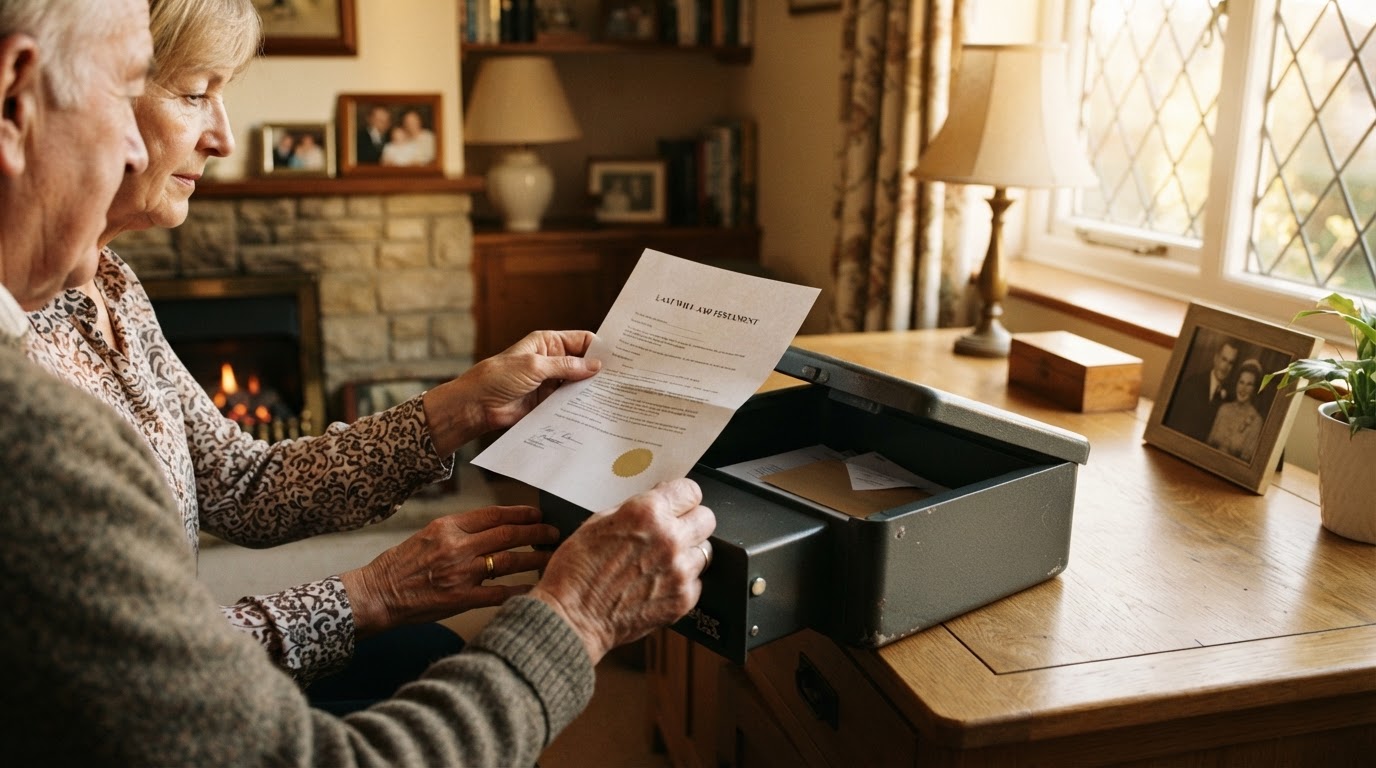
You've done the hard part — you've sat down, talked through your wishes, and written your Will. But there's one last step that catches too many families out: making sure your Will can actually be found when it's needed. Here's a plain-English guide to storing your Will safely across Oldham, Rochdale and Tameside.
Why storage matters
If your executors can't find your Will after you pass away, the law has to assume you died without one — meaning the Rules of Intestacy decide who inherits, regardless of what you actually wanted. A perfectly written Will is worthless if it's lost in a drawer.
Your storage options
- At home — a fireproof safe or a clearly labelled, secure drawer is fine for many people. Just make sure your executors know exactly where it is.
- With your will writer or solicitor — many offer secure Will storage, often free of charge, with a certificate of storage for your executors.
- With your bank — some banks offer Will storage, though accessing it after a death can be slower and may involve a fee.
- The Probate Service — you can lodge your Will with the Probate Service for a small fee, where it's held securely until needed.
Register your Will on the National Will Register
Whatever storage you choose, we strongly recommend registering your Will on Certainty — the National Will Register. It's the official register used by the legal profession, and it means that when the time comes, solicitors and probate professionals can quickly confirm a Will exists and locate it. It removes the most common cause of a Will being missed: nobody knowing it was written.
"A registered Will is a found Will. Telling your executors where it is — and registering it — is the simplest way to protect your wishes."
What to tell your executors
Make sure your executors know three things: that you have a Will, where it's stored, and that it's registered on Certainty. You don't need to share the contents — just the location. A quick conversation today saves your family real stress at a difficult time.
We can help with all of this
When we write your Will, we'll talk through your storage options, help you register it on the National Will Register, and make sure your executors know exactly where to find it. It's all part of the service — no extra stress, no hidden costs.
Sources & further reading
We believe in honest, well-sourced advice. These independent, official resources offer more detail on the topics covered above.
- Certainty — The National Will RegisterThe official national register of Wills used by the legal profession in England and Wales.
- Gov.uk — Storing your willOfficial guidance on safe Will storage and the Probate Service storage option.
- The Law Society — Storing your willIndependent information on Will storage and executors.
- MoneyHelper — Dealing with an estateImpartial guidance on what happens after a death and finding a Will.
Talk it through with a friendly local expert
Reading is a great start — but a quick chat can answer everything specific to your family. Free home visits across Oldham, Rochdale & Tameside.